
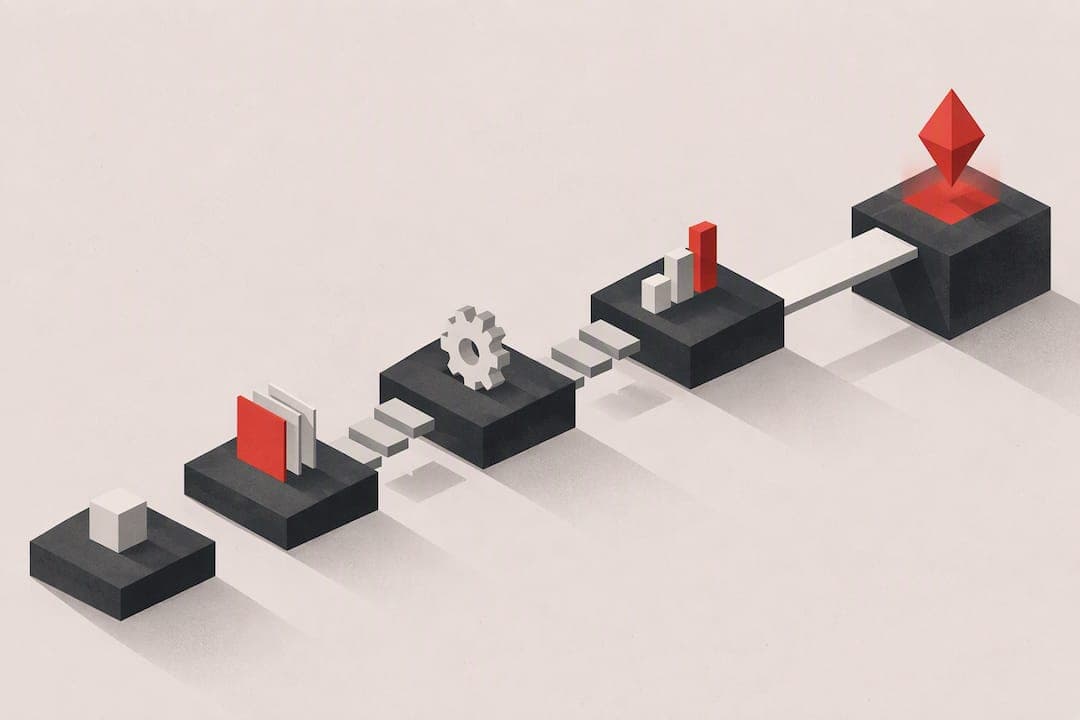
An aha moment is the first measurable event where a user clearly perceives your product's core value. Find the specific event that predicts retention, then redesign the path so more users reach it faster. That single move does more for growth than almost any onboarding tweak you could make otherwise.
TL;DR:
- Users who reach the aha moment faster are three times more likely to convert, return, and expand usage within 30 to 90 days.
- The most common aha events include sharing a document in collaboration tools, completing a transaction in marketplaces, or viewing a key dashboard in analytics tools.
- Validating candidate events requires path comparison, cohort uplift testing, survey confirmation, and continuous metric monitoring for causation.
- Simplifying onboarding by removing unnecessary steps and providing real-time cues accelerates users' arrival at the aha moment.
- Running quick, targeted diagnostics post-analytics helps identify and fix user drop-off points before committing full-scale product changes.
Table of Contents
- What an aha moment actually is, and how it differs from activation and product-market fit
- Why finding the aha moment matters for retention and growth
- A data-first workflow to identify candidate aha events
- Metrics and signals to track once you have a candidate
- A tactical playbook to get more users to the aha moment faster
- How to test and validate aha-driven changes before rolling them out
- Examples that show the pattern across product types
- Where a diagnostic tool fits in the aha-hunting process
- The one step most teams skip
- See where your own onboarding loses users before the aha moment
- FAQ
- Sources
What an aha moment actually is, and how it differs from activation and product-market fit
Merriam-Webster defines an aha moment as a moment of sudden realization, insight, recognition, or comprehension. In product terms, it's the instant a user answers their own question: why is this worth using for my problem? That's different from two terms people often confuse it with.
Activation is a behavioral milestone, a specific action a user completes, like sending an invite or creating a project. Product-market fit is a market-level signal that your product satisfies real demand at scale. The aha moment sits between them: it's the subjective spark that often precedes activation and, multiplied across users, contributes to fit.
Insight researchers describe the experience through four traits:
- Suddenness: the realization arrives abruptly rather than building gradually.
- Fluency: the solution suddenly feels easy or obvious.
- Positive affect: the moment carries a small emotional lift, often surprise or relief.
- Feeling of being right: users trust the insight without needing to verify it.
Scientific American's coverage of insight research notes that the "instant" of insight is usually the output of processing that happened beforehand. The implication for product teams is practical: you can't manufacture the emotional spike directly, but you can design the conditions, clean data, the right default, a well-timed prompt, that make the realization more likely to land.
Why finding the aha moment matters for retention and growth
Users who perceive value early stick around longer. When the path to that perception is cluttered with setup steps, unclear labels, or delayed feedback, people churn before they ever see what the product can do for them.
Time-to-aha works as a leading indicator because it sits upstream of almost every other growth metric. A user who reaches the aha event quickly is more likely to convert from trial to paid, more likely to return the following week, and more likely to expand usage over time. A user who takes too long, or never gets there, rarely does any of those things.

Fluency research suggests perceived "truth" in a moment of insight can be a misattribution, according to a review of aha experience studies, meaning a moment that feels like value isn't automatically value that lasts. That's why aha-focused metrics beat generic engagement counts for prioritization: raw session counts or click totals tell you people are active, not that they've understood why your product matters. Tying your roadmap to the specific event that correlates with long-term retention keeps your team working on the thing that actually moves the business, rather than whatever looks busy on a dashboard.
A data-first workflow to identify candidate aha events
Guessing at your aha moment wastes engineering time on the wrong fix. A short, repeatable analytics workflow gets you to a defensible candidate in days rather than months.
- Define your outcome and window. Pick a retention definition (returns in 7, 30, or 90 days) and a conversion outcome (trial-to-paid, free-to-upgrade) you're optimizing for.
- Compare paths of retained versus churned users. Pull the event sequences for each group and look for actions that show up disproportionately in the retained cohort before their first return visit.
- Run cohort uplift tests on the strongest candidates. Segment users who completed a candidate event against those who didn't, then measure the retention gap between the two groups.
- Validate with surveys. Ask both power users and churned users what made the product click (or why it never did) to confirm the quantitative signal matches lived experience.
- Instrument the winner. Turn the top candidate into a tracked event, or a short ordered set of two to three actions, so you can monitor it going forward.
This sequence works because each step filters out noise the previous one couldn't catch:
- Path comparison surfaces candidates from raw behavior, not assumptions.
- Cohort uplift tests separate correlation from events that merely happen to retained users for unrelated reasons.
- Surveys catch cases where the data looks right but the qualitative story doesn't match, a common trap when an event correlates with retention but isn't actually causal.
Running all five steps before writing a single line of onboarding copy saves teams from optimizing the wrong screen.
Metrics and signals to track once you have a candidate
Picking a candidate event is only half the job. You need a small set of metrics that tell you whether it's a true aha or a coincidence.
- Time-to-aha distribution and median: track how long it takes users to reach the event, not just whether they reach it.
- Cohort retention lift: compare 7-day, 30-day, and 90-day retention between users who hit the event and those who didn't.
- Conversion after aha versus without: express this as a simple risk or odds ratio so the size of the effect is comparable across tests.
- Downstream signals: watch repeat usage, monetization events, and referrals in the weeks following the candidate event.
A workflow that pairs path analysis with cohort uplift testing and survey validation is a method many product teams rely on to separate a real aha signal from noise, since no single metric proves causation on its own. Set a minimum threshold before you trust an event, for instance, require a meaningful retention gap that holds across at least two cohorts before you commit engineering time to promoting that event earlier in the flow. Revisit the metric monthly, because what counted as the aha moment during a lean beta can shift once a product adds features or serves a different audience.
A tactical playbook to get more users to the aha moment faster
Once you know the event, the job shifts to design: remove friction, shorten the path, and make the moment unmistakable when it arrives.
Start by mapping the shortest route a successful user takes to the candidate event, then strip out every step that doesn't directly serve it. Setup screens, optional integrations, and secondary feature tours can usually wait until after the first value hit.
- Build contextual tours targeted by job-to-be-done rather than one generic walkthrough for every signup, since a freelancer and an enterprise buyer rarely need the same first five minutes. Guidance on interactive product tours covers how to scope these by use case rather than by feature list.
- Personalize defaults and sequencing for your top segments so the first screen a user sees already looks relevant to their specific problem.
- Use micro-copy and visual cues to mark the moment when it happens, a brief confirmation, a progress indicator, a small animation, so the user's attention lands on the value they just received.
- Apply progressive disclosure: hide advanced settings and secondary features until after the primary aha, so early screens stay focused on one outcome.
Usability research on reducing friction in early product experiences backs the same principle from a different angle: the easier a benefit is to perceive, the more likely a user is to act on it.
Pro Tip: Celebrate the aha moment with a specific confirmation message tied to the user's own input, not a generic "success!" banner.

How to test and validate aha-driven changes before rolling them out
Shipping a faster path to your candidate event doesn't guarantee it helps. Treat every change as a hypothesis and test it the same way you'd test a pricing change.
- Set a primary metric and a minimum detectable effect before you build anything, cohort retention or conversion, not both, so the test has a clear pass or fail line.
- Use a holdout group and funnel guardrails so you can catch a change that speeds up the candidate event but quietly hurts a downstream metric like revenue per user.
- Analyze results by segment first, since a change that helps one job-to-be-done can do nothing, or even hurt, for another.
- Replicate the result across at least one more cohort before declaring a win, and pair the product change with a messaging update to see whether the two together produce a bigger, more durable lift than either alone.
This sequence keeps a single enthusiastic test result from becoming a permanent roadmap decision.
Examples that show the pattern across product types
Seeing the pattern in a few product categories makes it easier to spot in your own.
- Collaboration tools: the first shared edit, a document another person opens or comments on, tends to predict retention because it proves the tool works as a shared space, not a solo notebook.
- Marketplaces: the first completed transaction involving both a buyer and a seller signals trust on both sides of the exchange, which single-sided actions like browsing or listing never fully capture.
- Analytics and BI tools: the first dashboard that surfaces a number tied to the user's own goals, revenue, churn, conversion, marks the moment raw data turns into a decision-making tool.
- Consumer and social apps: the first share or invite that connects a user to someone they know shifts the product from a solo experience to a social one, which is often the real retention driver.
To map your own product, ask which single action most consistently separates users who stick around from those who disappear within a week, then check whether that action involves another person, a clear number, or a tangible output the user didn't have before.
Where a diagnostic tool fits in the aha-hunting process
Once you've narrowed candidate events through analytics, a structured audit can speed up the next step: finding exactly where users stall before they get there. A diagnostic platform runs both AI-driven diagnostics and human expert reviews across seven audit layers, covering technical SEO, performance, UX and navigation, conversion, accessibility, trust and security, and onboarding.
- Ranked fixes by impact: findings come back prioritized, so teams know which barrier to fix first.
- Exportable findings: results translate directly into testable hypotheses for the A/B tests described earlier.
- Fits after initial analytics: teams typically run path analysis and cohort validation first, then use a layered audit to diagnose why a specific step is leaking users, before building and testing a fix.
The one step most teams skip
Pick a single retention window and run the path comparison this week, not after the next planning cycle. Most teams already have the data sitting in their analytics tool; they just haven't asked it the right question yet. Treat the first candidate event you find as a hypothesis, not a verdict, and let the cohort numbers argue with you before you commit a quarter of roadmap time to it.
— William
See where your own onboarding loses users before the aha moment
Manual path analysis gets you a strong hypothesis, but confirming where users actually drop off inside your signup and onboarding flow takes a closer look at the page itself. Our free scan gives you a first pass at that, and the Solo and Founder plans add the human expert review and ranked fix list that turn a diagnosis into a prioritized to-do list.
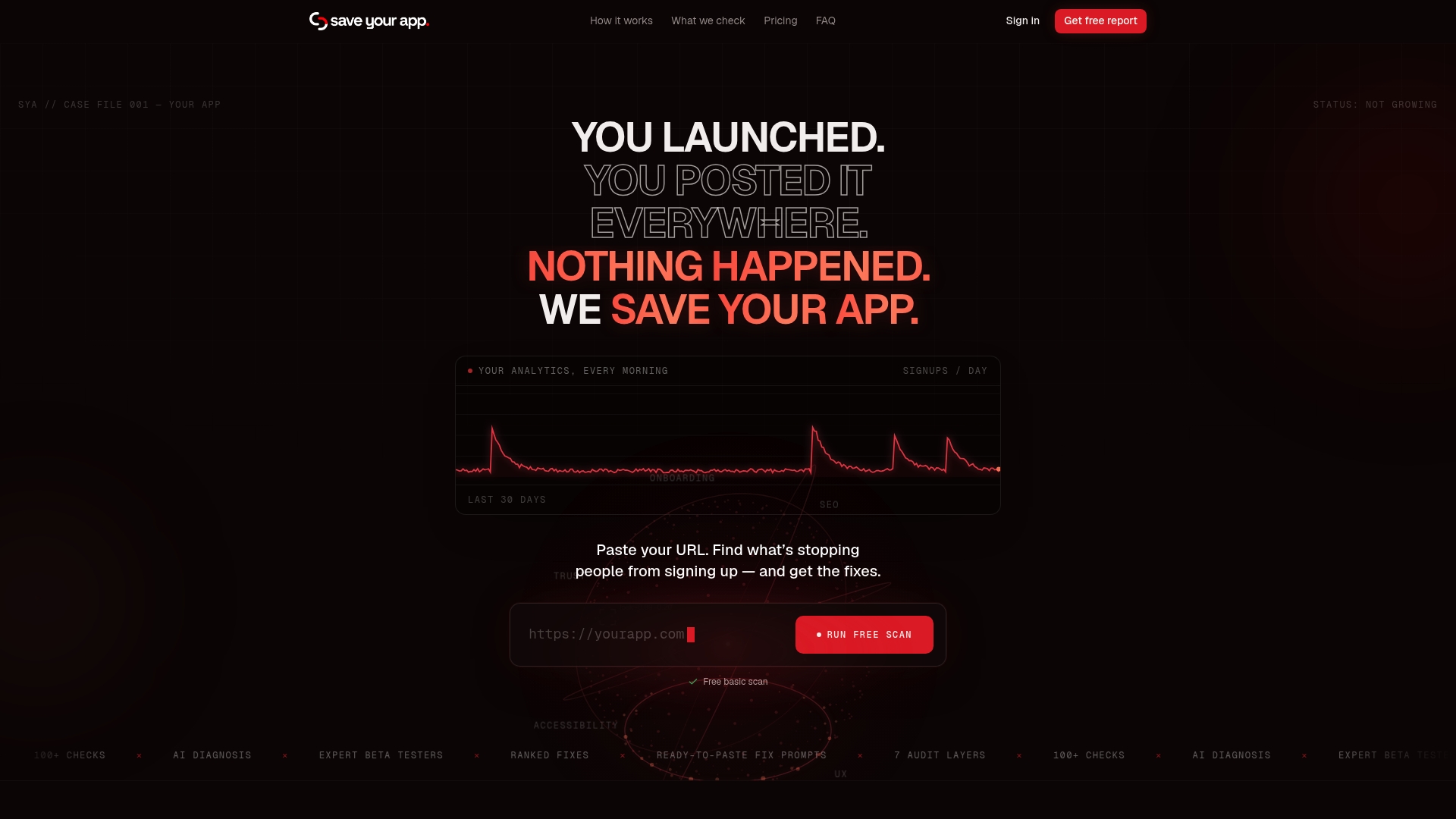
Running the free scan alongside the cohort workflow above gives you two independent signals pointing at the same leak, which makes the fix easier to justify internally. Check pricing here when you're ready for repeated audits instead of a one-time look.
FAQ
What is a good aha moment?
A good aha moment is a specific, trackable event that shows a statistically meaningful retention lift when compared across cohorts, not just a moment that feels impressive in a demo. The best candidates also survive validation through surveys of both power users and churned users, confirming the quantitative signal matches real experience.
Can you give me an example of an aha moment?
In a collaboration tool, a common aha moment is the first time a user shares a document and someone else opens or edits it, since that proves the product works as a shared space rather than a personal notebook. In a marketplace, it's often the first completed transaction involving both a buyer and a seller.
What does "aha moment" mean?
Merriam-Webster defines it as a moment of sudden realization, insight, recognition, or comprehension. In a product context, that translates to the instant a user perceives why your product solves their specific problem.
What triggers an aha moment?
Insight research points to a buildup of fluency, meaning the solution suddenly feels easy or obvious even though the understanding was built on processing that happened just before that instant, according to coverage of aha experience neuroscience. Product teams can't force the emotional spike directly, but they can design clearer defaults, faster feedback, and less friction to make that fluency more likely.